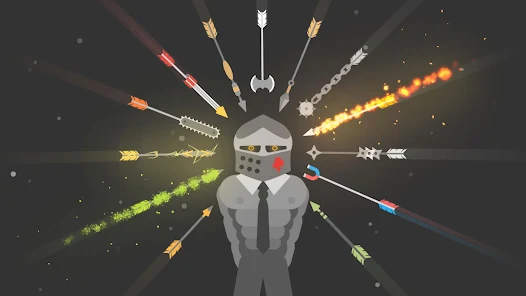
I didn’t mean to get attached to Ragdoll Archers . I clicked it on my desktop browser thinking, “Cool, I’ll shoot a few arrows and be back to normal adult life in ten minutes.” Famous last words. Ten minutes turned into a series of increasingly dramatic misses, one accidental “domino victory” that shocked me, and a new personal belief that my character’s arms are animated by pure chaos.
The funniest part is how quickly you think you’re getting the hang of it. The controls are simple, the bow and aiming feel immediate, and it’s a browser game, so there’s no setup ritual. Then you take your first shot with confidence and realize the stickman archer does not share your optimism. The arrow goes where gravity tells it to, not where your eyeballs swear it should go. That’s when the ragdoll physics start showing off.
Playing Ragdoll Archers on a computer is smooth and easy to jump into. I’m clicking, dragging, and aiming with the kind of casual rhythm you’d use for any quick arcade thing. But the game keeps nudging you to slow down just a little. If I rush, my shot power ends up too high or too low, and the angle becomes this delicate little negotiation between “close enough” and “why is my arrow doing parkour?”
Shot power is the big teacher. Early on, I treated it like a volume knob. If I wanted more distance, I cranked it. If I was worried, I softened it. That logic lasted about three shots. After that, I started noticing that adjusting power isn’t just about reaching the target. It changes the whole arc, and the arc is basically the story. One shot might skim over and miss by a hair, while another lands perfectly because I committed to a different arc shape.
Angles matter too, but they’re sneaky. It’s not always obvious that a “safe” aim is actually wrong. Sometimes I’ll line up what looks like a sensible shot and the arrow drops at the last second like it suddenly remembered physics class. Other times I’ll aim a bit differently and the landing feels almost magical. Almost. Because then the ragdoll physics kick in and make the outcome way funnier than it should be.
Let me say this gently: missed shots are entertaining, but getting a hit is where things get ridiculous. You’d think a good shot would mean a clean result. Instead, my opponent’s body sometimes reacts like it’s made of noodles. I’ve watched a single impact send someone tumbling in a way that looks choreographed, like they’re performing an accidental interpretive dance in midair.
And then there are the moments that feel like the game is trolling me. I’ll have a near-perfect placement, and the aftermath is… awkward. The stickman archer might sway too much, or the reaction shifts the scene just enough that my next plan goes out the window. I’ll think, “Okay, that worked,” and then immediately realize that the board—or rather, the battlefield—has changed in the most inconvenient way possible.
Those moments are frustrating, but in a way that keeps me playing. I start wanting to recreate what happened, except with control. That’s my loop now: shoot, observe, adjust, and then try again with slightly calmer decisions.
The practical tips I picked up weren’t from reading anything fancy. They came from repeatedly getting humbled by the same pattern: I’d overthink after a miss, then swing too hard in the opposite direction. So now I try to keep it simple. I’ll glance at the distance, decide whether the power needs to be gentle or firm, and commit. If I adjust too many variables in one shot, I never learn which change mattered.
I also learned to look at the space I’m leaving myself for the next move. One shot can clear things up, but it can also create a new obstacle depending on how everything falls and bounces. The game’s unpredictable outcomes make “one move ahead” more important than I expected. I’m not just aiming at a target; I’m aiming at the situation that will exist after the ragdoll physics do their thing.
And when I do get a win, it’s usually because I stopped treating each arrow like an isolated event. I started thinking in terms of momentum: can this shot set me up, or is it going to force my next shot into a narrow, annoying angle?
Ragdoll Archers is the kind of browser game that keeps pulling me back because it’s easy to start and hard to master in a satisfying way. You get quick rounds, funny failures, and that tiny thrill when you finally make the arrow behave. If you like physics based archery games, give Ragdoll Archers a try. Just don’t be surprised when you plan to play “one more shot” and end up negotiating with gravity like it’s your new roommate.